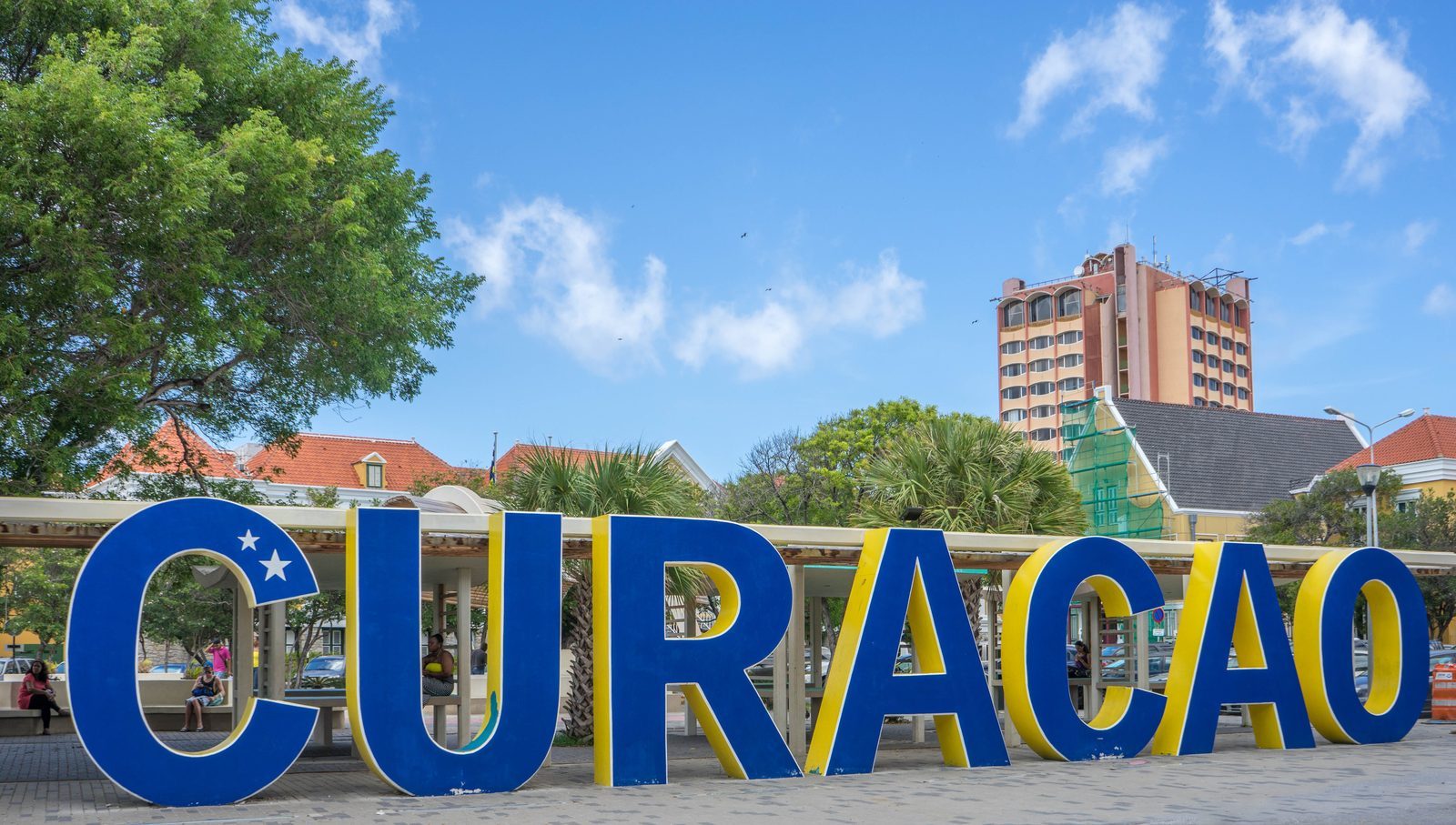
The flag of Curaçao. The two stars represent the island of Curaçao and Klein Curaçao. (We couldn't use an actual match photo here due to copyright on official press images: see the real thing on the team's official Instagram.)
In November 2025, something happened that had never happened before in the history of the World Cup: Curaçao. Population under 150,000, qualified for the 2026 FIFA World Cup, topping their CONCACAF qualifying group and becoming the smallest nation by both population and land area ever to reach the tournament.
The team plays under the nickname The Blue Wave, captained by Leandro Bacuna (formerly of Aston Villa, now playing in Türkiye), with his brother Juninho Bacuna alongside him in midfield. Their squad is scattered across nearly a dozen leagues worldwide — Miami to Switzerland to Saudi Arabia. But every one of them plays for the same small island.
Drawn into a brutal Group E alongside Germany, Ecuador, and Ivory Coast, the Blue Wave made history again in their opening match: Livano Comenencia scored Curaçao's first-ever World Cup goalagainst Germany. Their second match brought an even bigger milestone: a 0-0 draw with Ecuador, Curaçao's first point at a World Cup, with goalkeeper Eloy Room turning in a heroic 15-save performance and being named Man of the Match. The first Curaçaoan player ever to earn that honor at a World Cup.
Even the kits tell the island's story: the away shirt draws its pastel yellow, orange, pink, and turquoise straight from the streets of Punda and Otrobanda in Willemstad, while the home kit's deep blue represents the Caribbean Sea itself, with subtle wave patterns on the sleeves.
Whether Curaçao advances further or not, they've already made history simply by being there. And if you're on the island during a match, you'll feel exactly why they call it a wave: it moves through every street, every bar, every beach, all at once.